What can we help you with?
EXOPLANETS
Worlds Beyond Our Solar System: The Search for Exoplanets”
Enticing description
What if our Solar System is just one of billions of planetary systems in the universe?
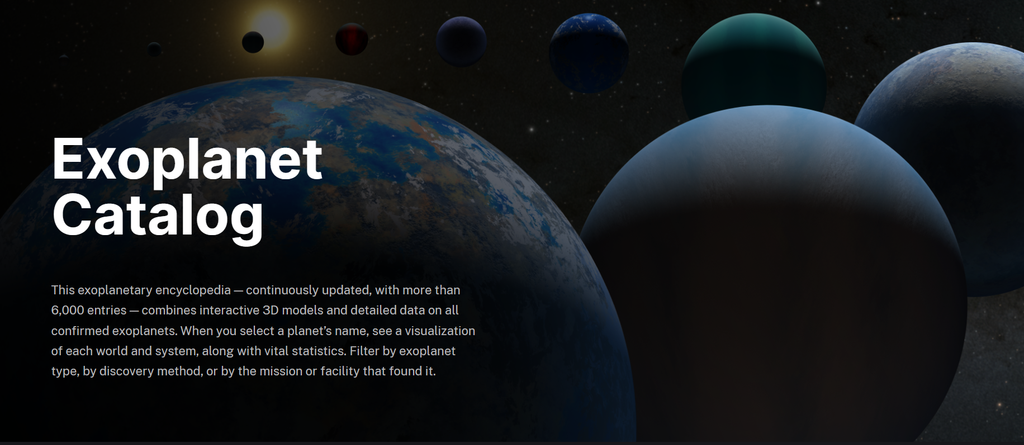
Astronomers are discovering thousands of exoplanets—planets that orbit stars beyond our Sun. Some are enormous gas giants, while others are rocky worlds that may resemble Earth. By studying how these distant planets affect the stars they orbit, scientists can learn about their atmospheres, compositions, temperatures and how planetary systems form.
The search for exoplanets is changing the way we understand our place in the universe—and raising one of astronomy’s biggest questions: could some of these distant worlds have the conditions needed for life?
🔭 A few fascinating facts
- 6,000+ exoplanets have been confirmed, and the catalogue continues to grow.
- The closest known exoplanet to Earth, Proxima Centauri b, is about 4 light-years away.
- Astronomers can detect planets that are incredibly difficult to see directly by observing effects they have on their parent stars—for example, causing a star to appear to wobble or become slightly dimmer when the planet passes in front of it.
- Exoplanets come in remarkably different forms, including rocky planets, gas-rich worlds and extremely hot planets where scientists believe molten material may exist.