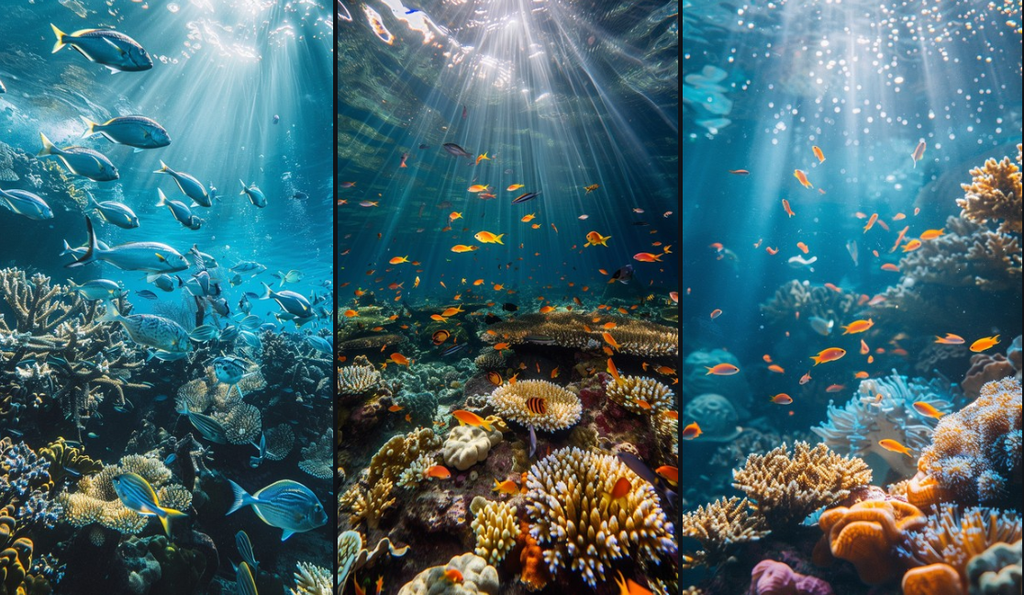
The Aqua
🌊 A World We Have Yet to Fully Explore
Beneath the surface of the world’s oceans lies an extraordinary environment filled with life, mystery and extreme conditions. From colourful coral reefs to the darkness of the deep sea, aquatic ecosystems support millions of organisms and play a vital role in the health of our planet.
Scientists continue to discover new species and study environments that receive little or no sunlight. Some deep-sea organisms have developed remarkable adaptations to survive enormous pressure, freezing temperatures and complete darkness.
The ocean isn’t simply a vast body of water—it is a complex ecosystem that influences Earth’s climate, biodiversity and the lives of billions of people.
🐠 Did You Know?
- The oceans cover approximately 71% of Earth’s surface.
- Scientists estimate that the majority of ocean species remain undiscovered.
- Some deep-sea organisms produce their own light through a process called bioluminescence.
- The deepest known part of the ocean, Challenger Deep in the Mariana Trench, reaches nearly 11 kilometres below sea level.
- Oceans absorb a significant amount of the carbon dioxide produced by human activities, making them an important part of Earth’s climate system.
🔬 Why Study the Ocean?
Understanding aquatic environments helps scientists answer important questions:
How do marine ecosystems respond to climate change?
How do deep-sea organisms survive extreme environments?
How can we protect coral reefs and other fragile ecosystems?
How much undiscovered life exists beneath the waves?
With advanced submarines, remotely operated vehicles and underwater sensors, researchers are gradually exploring parts of the ocean that were once almost impossible to reach.