Black Holes
The Universe’s Most Mysterious Objects
What happens when gravity becomes so powerful that even light cannot escape?
Black holes are among the most fascinating objects in the universe. They can form when massive stars reach the end of their lives, collapsing under their own gravity into an incredibly dense region of space. Although black holes themselves cannot be seen directly, astronomers can detect them by observing how they affect nearby stars, gas and light.
From stellar-mass black holes to the supermassive black hole at the centre of our galaxy, these cosmic objects provide scientists with a remarkable way to study gravity, space and time.
🔭 Fascinating facts
- Nothing that crosses a black hole’s event horizon can escape, including light.
- The Milky Way’s centre contains a supermassive black hole called Sagittarius A*, which has a mass roughly 4 million times that of our Sun.
- Black holes aren’t cosmic vacuum cleaners. An object has to get sufficiently close to a black hole for its gravity to capture it.
- Scientists can detect black holes by observing the effects of their gravity on nearby objects and by detecting gravitational waves produced when black holes merge.
A Glimpse Into a Black Hole
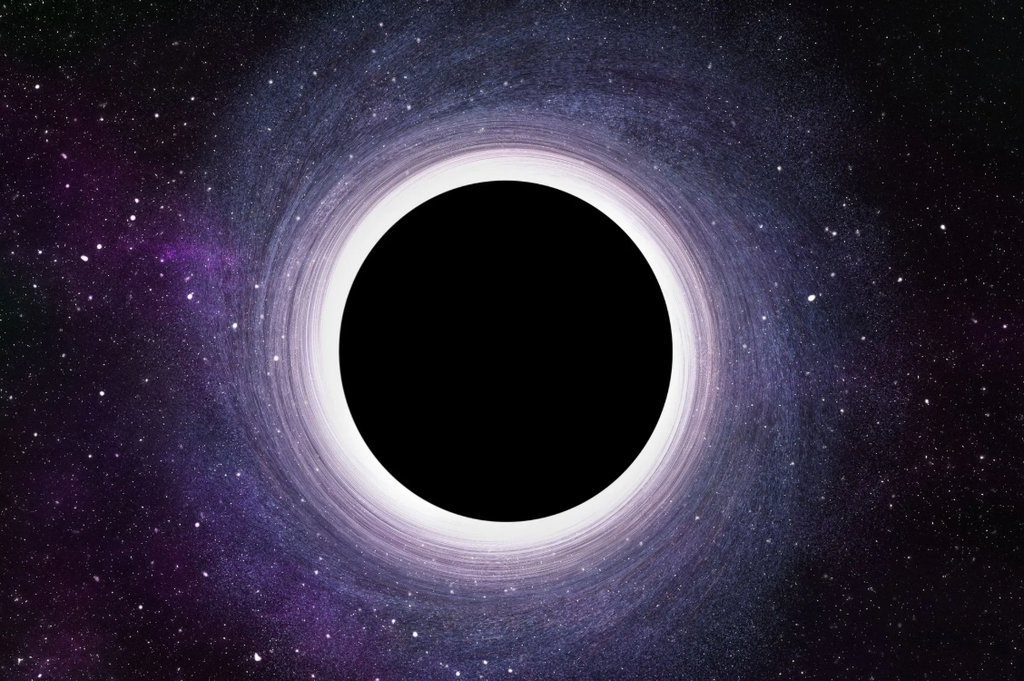
A black hole may be invisible, but its immense gravity leaves unmistakable clues. The bright ring surrounding one is formed by superheated gas and light being pulled into its powerful gravitational field. Images and observations like these help astronomers explore some of the most extreme environments in the universe.